


Walk into any modern kitchen showroom and one surface keeps stealing the show: clean, bright, uniform and almost suspiciously easy to live with. That surface is quartz. It is also the surface that comes with the most myths, from “it is just plastic” to “it can never be damaged”. This guide separates the facts from the sales talk, so you can decide whether quartz countertops really belong in your South African kitchen or bathroom.
The short answer
- Best for: busy family kitchens, consistent colours, low-maintenance living, and modern bathrooms.
- Biggest strength: it is non-porous, so no sealing and very good stain resistance.
- Biggest weakness: heat and strong sunlight. Always use trivets, and keep it indoors.
- Biggest thing to ask: how your fabricator controls dust when cutting, because quartz dust is a real workplace hazard.
What are quartz countertops, really?
Quartz countertops are an engineered stone. Crushed natural quartz is blended with resins and pigments, then pressed and cured into dense slabs. That recipe is why the pattern can be so even, and why you can order the same colour twice and get a near-identical match. If you want the technical background, the engineered stone overview explains how these materials are made and where they are used.
One thing trips up almost every buyer: quartz and quartzite are not the same thing. Quartzite is a natural stone dug out of the ground. Quartz, in the countertop sense, is man-made. When you read a quote, check which one is on it, because the price, care and behaviour are very different.
| Quartz property | What it means in your kitchen |
|---|---|
| Non-porous surface | No sealing, and spills such as wine, coffee and oil are far less likely to soak in. |
| Consistent pattern | What you see on the sample is close to what you get, which helps when you plan around a colour scheme. |
| Very hard surface | Handles everyday chopping and scrubbing well, though you should still use a board. |
| Resin binder | The reason it dislikes direct heat and long exposure to harsh sun. |
| Engineered, not natural | No two natural slabs to compare, so choose by colour and finish rather than “character”. |
How much do quartz countertops cost in South Africa?
This is the question behind a lot of searches, and the honest answer is that a “per square metre” figure on its own is almost meaningless. Two kitchens of the same size can have very different totals. International price guides generally place quartz in the same broad bracket as mid-range granite, with premium ranges costing more. What really moves your quote is below.
| What affects the price | Effect on your quote | Money-saving tip |
|---|---|---|
| Range and brand tier | Premium, marble-look and designer patterns cost more than plain colours. | Ask for a plain or lightly speckled option in the same colour family. |
| Slab thickness | Thicker slabs and built-up edges use more material. | Use a standard thickness with a simple edge on the main run. |
| Edge profile | Decorative edges add labour. | A straight or softly eased edge looks modern and costs less. |
| Cut-outs | Sinks, hobs and taps each add work, undermount sinks more so. | Decide your sink and hob before the template is made. |
| Layout and joins | L-shapes, islands and waterfalls use more slab and need careful planning. | Ask for a slab layout so waste is kept low. |
| Delivery and fitting | Distance, access and removal of the old top all count. | Clear the work area and confirm access before fitting day. |
For a deeper look at stretching a budget, read our guide to affordable quartz countertops in South Africa. When you are ready for real numbers, request a quotation and we will price your actual layout.
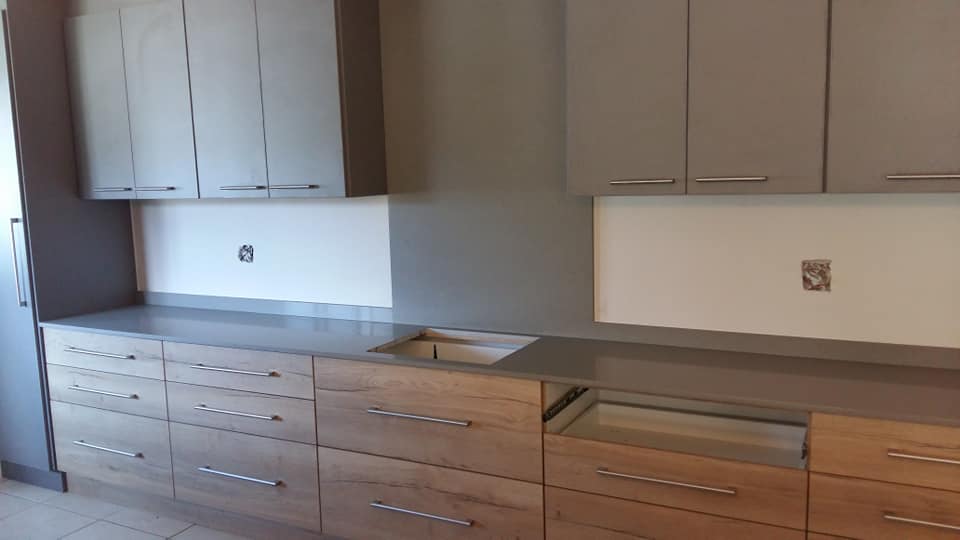

Quartz colours and patterns that suit South African homes
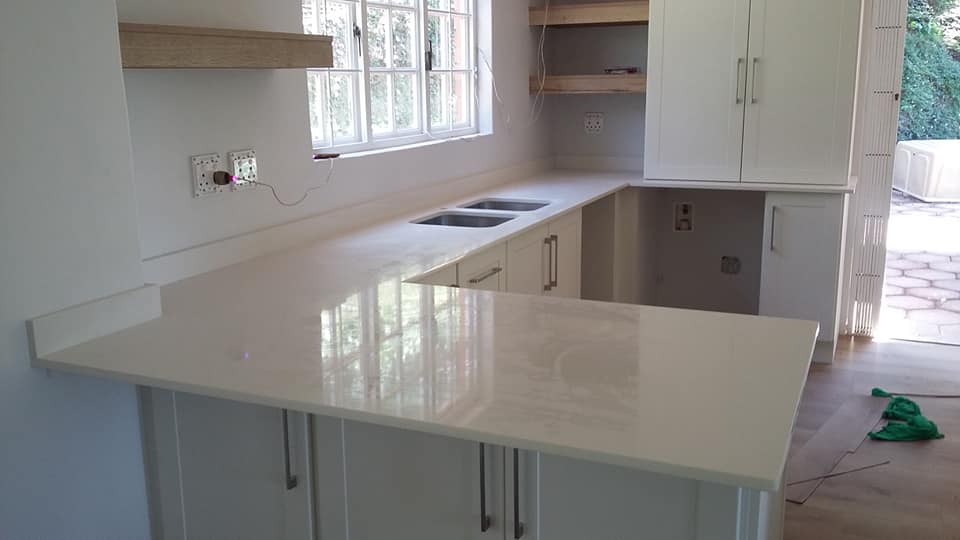
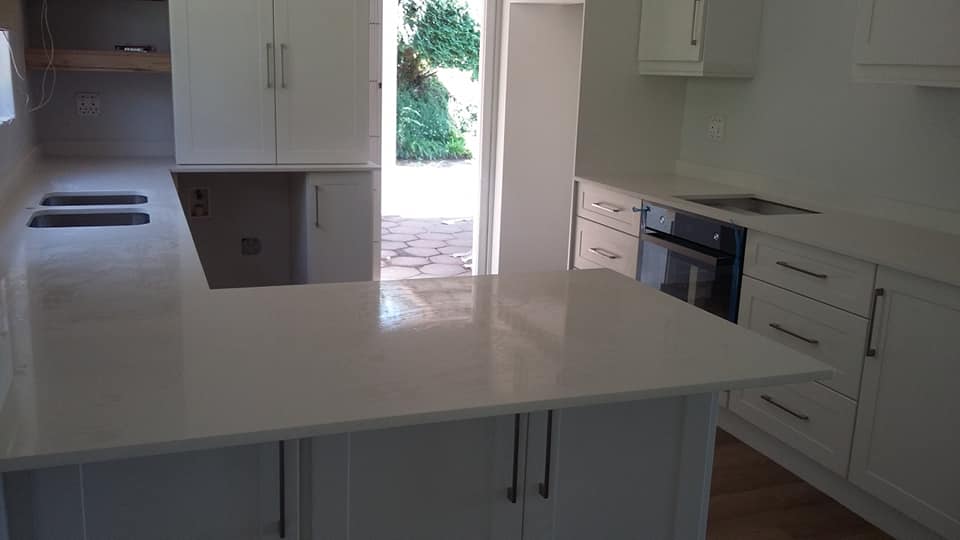
Quartz comes in a far wider palette than natural stone, and that is a big part of its appeal. These are the families we see homeowners ask for most:
- Soft whites and marble-look veining: the bright, airy look without the staining worries of real marble.
- Warm beiges and creams: perfect with oak, timber doors and earthy flooring.
- Greys and graphite: modern and calm, ideal for open-plan kitchens.
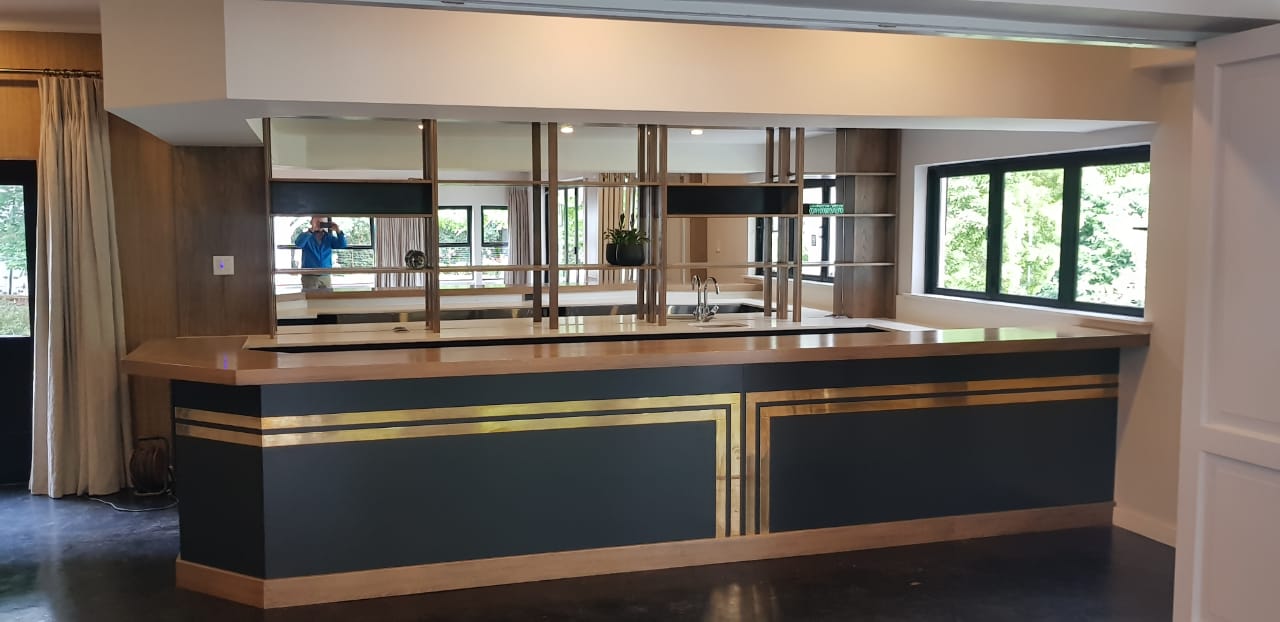
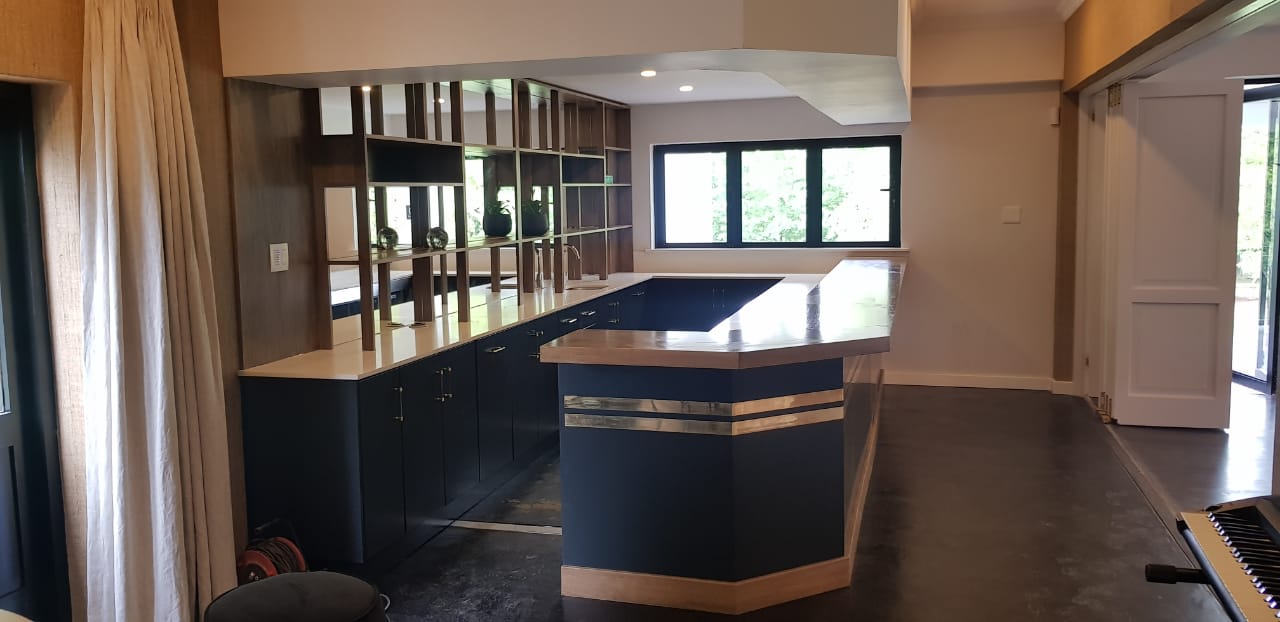
- Deep black and charcoal: dramatic islands and bar tops.
- Speckled and concrete looks: forgiving of crumbs and everyday marks.
Not sure where to start? Our walkthrough of quartz countertop colours and patterns shows how to match a stone to your cabinets, floors and light.
Quartz countertops: honest pros and cons
What quartz does well
- No sealing, ever
- Excellent stain resistance
- Even, repeatable colours
- Easy day-to-day cleaning
- Huge range of modern colours
- Great for bathrooms and vanities
Where quartz struggles
- Dislikes direct heat from pots
- Can fade in strong direct sun
- Lacks the one-of-a-kind look of natural stone
- Edges can chip under hard impact
- Fabrication dust needs proper control
The conversation most people skip: silica dust
Here is the part that rarely makes it into brochures, and it is worth knowing. Engineered quartz can contain a very high share of crystalline silica. The US National Institute for Occupational Safety and Health notes that quartz surfacing can contain up to 93 percent crystalline silica, compared with less than 45 percent in granite, and that cutting, grinding and polishing it can release hazardous dust. You can read their full explanation in the NIOSH bulletin on silica hazards from engineered stone countertops, and the condition it can cause is explained in this overview of silicosis.
What does that mean for you as a homeowner? The risk sits with the people cutting the slab, not with you wiping your countertop once it is installed. So the smart question to ask any fabricator is simple: “How do you control dust when you cut and polish quartz?” A good answer mentions wet cutting, extraction and proper respirators. A vague answer is a red flag.
Heat, sun and everyday abuse
Quartz is tough, but it is not indestructible. Three habits protect it:
- Always use a trivet. Quartz is heat resistant, not heatproof. A pot straight off the hob is the classic way to leave a permanent mark.
- Keep it indoors. Long exposure to strong direct sun can fade or discolour the resins, so granite is the better pick for a braai area. See our guide on granite for outdoor kitchens.
- Skip harsh cleaners. Strong solvents and paint strippers can dull the finish. Mild soap and water is all it needs.
For a full routine and what to do about stubborn marks, see how to clean and care for quartz and engineered stone.
Quartz vs granite vs marble vs onyx
If you are still choosing between materials, this snapshot shows where each one shines.
| Feature | Quartz | Granite | Marble | Onyx |
|---|---|---|---|---|
| Natural or engineered | Engineered | Natural | Natural | Natural |
| Sealing needed | No | Yes | Yes, regularly | Yes |
| Heat tolerance | Moderate, use trivets | High | Moderate | Low |
| Pattern consistency | Very high | Unique per slab | Unique per slab | Unique, translucent |
| Best use | Kitchens, vanities | Kitchens, outdoors | Vanities, feature kitchens | Feature walls, bar fronts |
Want the full breakdown? Read our quartz vs granite durability comparison, the onyx vs quartz kitchen countertops guide and our overview of kitchen countertop materials compared.
Quartz in the bathroom
Bathrooms are where quartz quietly shines. It is non-porous, so toothpaste, cosmetics and soap scum wipe away, and it can be fabricated with moulded sinks for a seamless look. Our guide to custom engineered stone bathroom vanities covers sizes, sink options and fitting.
Your pre-purchase checklist: 8 questions to ask any supplier
- Is this quartz or quartzite, and can I see it on the quote?
- Can I view the actual slab, not just a small sample?
- What thickness and edge are included in the price?
- Are sink and hob cut-outs included?
- How do you control dust during cutting and polishing?
- What is the warranty and what does it cover?
- Is delivery, fitting and removal of the old top included?
- How long from template to installation?
Is quartz right for you?
Choose quartz if you want a clean, consistent look and zero sealing. Look at granite if you cook with heat, love natural patterns or want an outdoor surface. If you are somewhere in the middle, a stone selection consultation lets you compare real slabs side by side, and you can browse our engineered stone range and our residential projects for inspiration.
Ready to see quartz in your own kitchen?
Send us your measurements and we will price it properly. Request a free quotation or speak to our team.
Frequently asked questions about quartz countertops
How much do quartz countertops cost in South Africa?
There is no single price, because it depends on the range, slab thickness, edge profile, cut-outs and how complex your layout is. Quartz usually sits in the same general bracket as mid-range granite. The only reliable number is a written quote based on your measurements, so request one before you fall in love with a colour.
Do quartz countertops need to be sealed?
No. Quartz is non-porous, so it does not need sealing the way granite or marble does. Regular cleaning with mild soap and water is enough for daily care.
Can I put a hot pot on a quartz countertop?
It is best not to. Quartz is heat resistant but not heatproof, because the resin that binds the stone can be damaged by sudden, intense heat. Use a trivet or hot pad every time.
Is quartz better than granite?
Neither is better in every situation. Quartz wins on consistent patterns and zero sealing. Granite wins on heat tolerance, natural one-of-a-kind patterns and outdoor use. Our quartz vs granite comparison walks through the trade-offs in detail.
Is quartz safe to have in my home?
Once fabricated and installed, the finished surface is not the concern. The health risk comes from breathing the fine dust created when engineered stone is cut, ground or polished, which is why fabricators must control dust with wet cutting, extraction and proper respiratory protection.
Can quartz be used outdoors?
Generally no. Strong direct sunlight can fade or discolour the resins in quartz over time, so granite is the safer choice for a braai area or patio kitchen.
How long do quartz countertops last?
With sensible care, quartz countertops can last for many years in a busy family kitchen. Avoiding heat shock, harsh chemicals and impact on the edges does the most to protect them.